01
Find the source
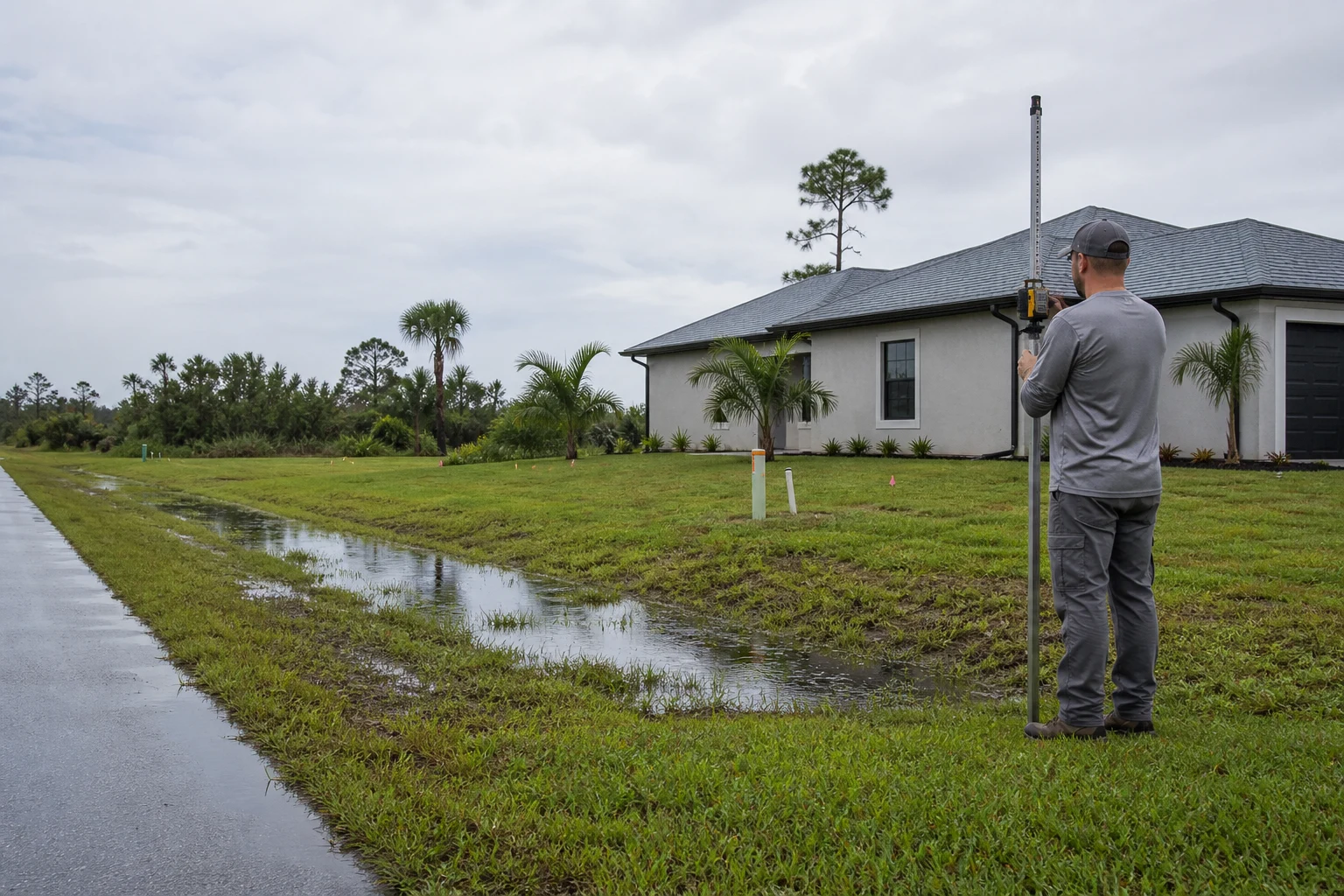
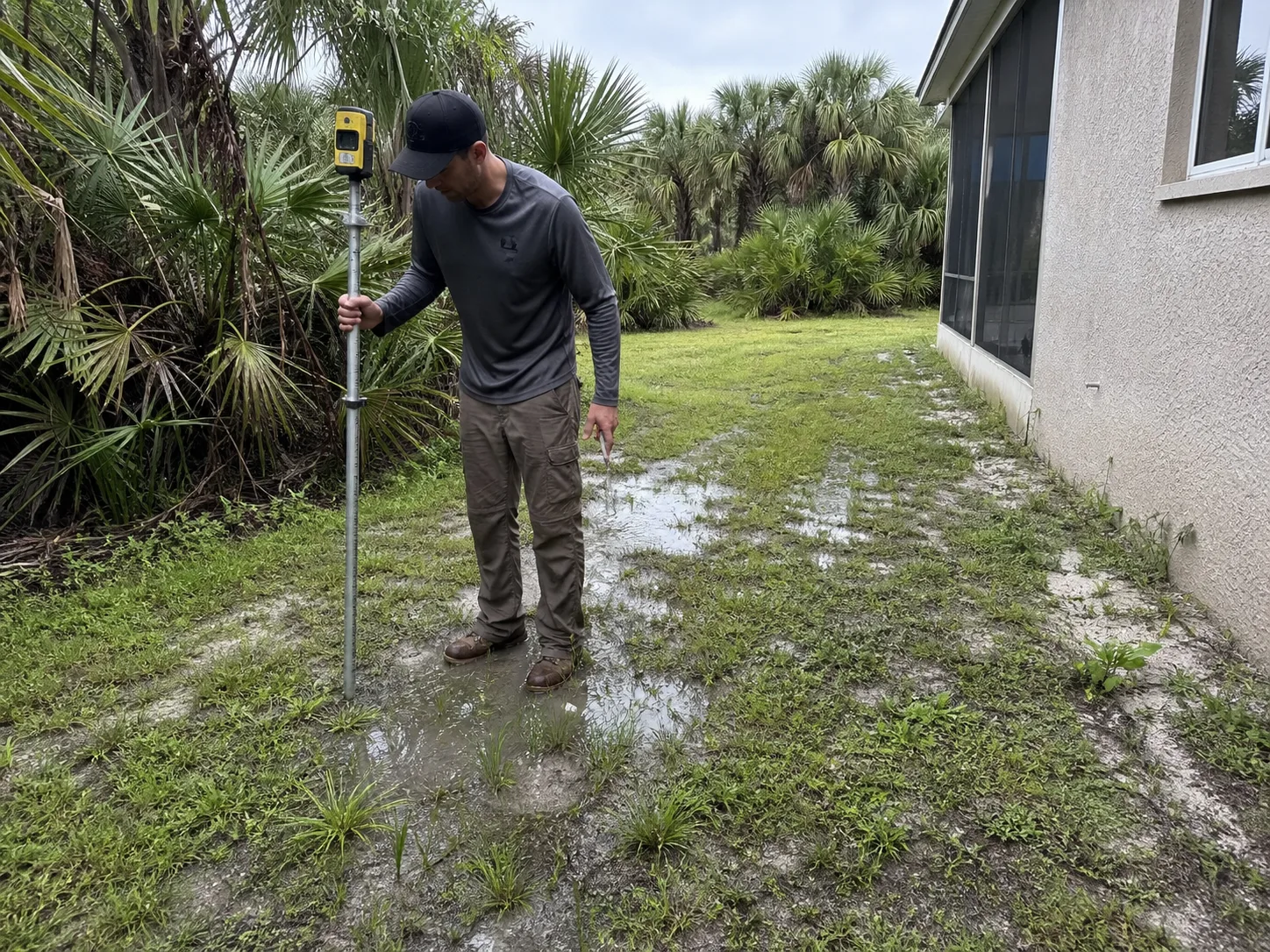
Standing-water diagnosis
Use one complete rain event, recession timing and lot elevations to separate storage from failure.
Explore this service →Yard drainage help for North Port homeowners
Diagnose where water starts, how long it remains and which surface or subsurface approach fits a flat Southwest Florida lot.
What can we help with?
Drainage services
North Port’s flat terrain and regional stormwater network make source, slope, outlet, easements and neighboring flow part of every useful assessment.
Find the source
Use one complete rain event, recession timing and lot elevations to separate storage from failure.
Explore this service →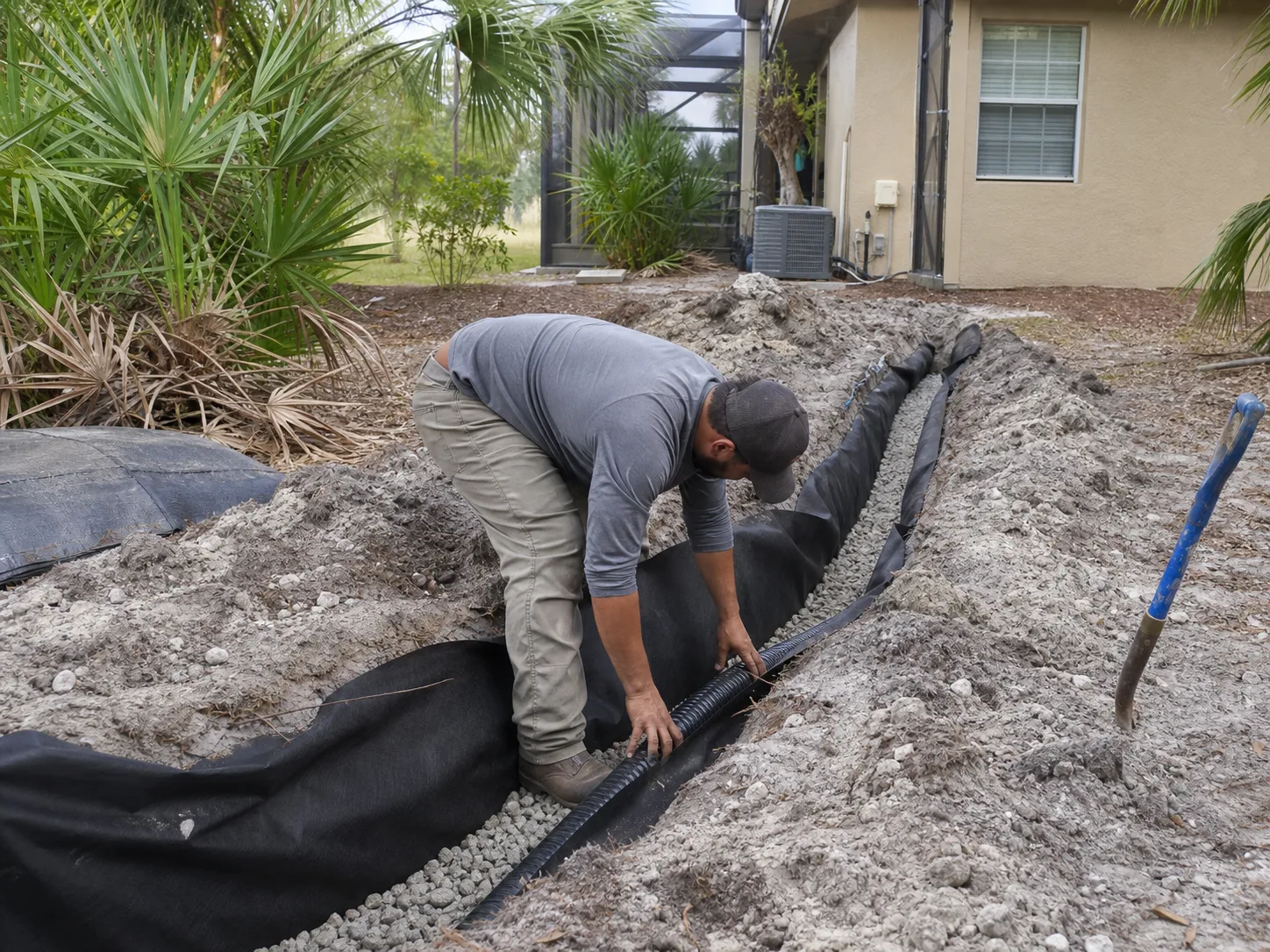
Subsurface collection
Collect saturated-soil flow only where a maintainable, lawful and lower outlet exists.
Explore this service →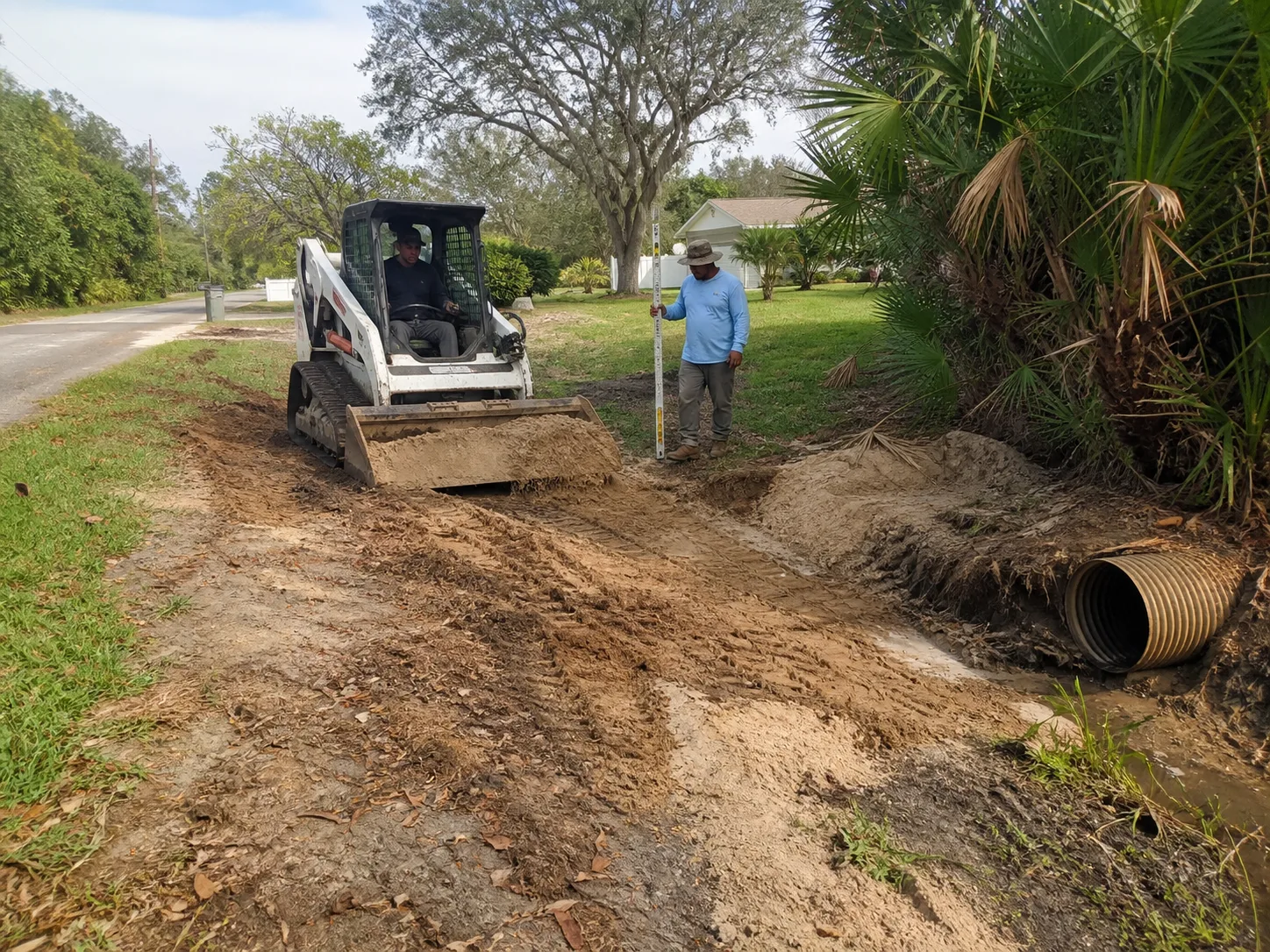
Surface flow
Restore positive drainage without obstructing the frontage system or flooding another property.
Explore this service →North Port stormwater context
North Port maintains parts of the public network, including pipes, inlets, swales, ditches and canals. Its guidance notes that swales can retain water for up to 72 hours after sustained rain while filtering and releasing stormwater.
Useful details before the first visit
Mark the high-water line.Photograph doors, slab edges, swales and where water enters.
Trace the outlet.Find the swale, ditch, canal, inlet or other lawful discharge path.
Record what changed.New sod, fill, pools, patios and neighboring work can alter flow.
North Port decision guide
| What you notice | Possible approach | What still needs inspection |
|---|---|---|
| Water near slab or lanai | Grade and collection review | Downspouts, elevations and low pockets |
| Roadside swale stays full | City request or swale restoration | Culvert, sediment and downstream elevation |
| Backyard ponds after storms | Swale, inlet or French-drain review | Water table, outlet and off-site inflow |
| Soil washes at an edge | Flow correction plus stabilization | Discharge concentration and outlet velocity |
Educational comparison only—not a survey, engineering design, permit determination or bid.
How requests work
Useful project details make it easier for an independent provider to confirm fit, timing and the next sensible step.
Record where water appears, maximum depth and recession time.
An available provider reviews the source, route, easements and discharge.
Review permits, drainage work, restoration, maintenance and price.
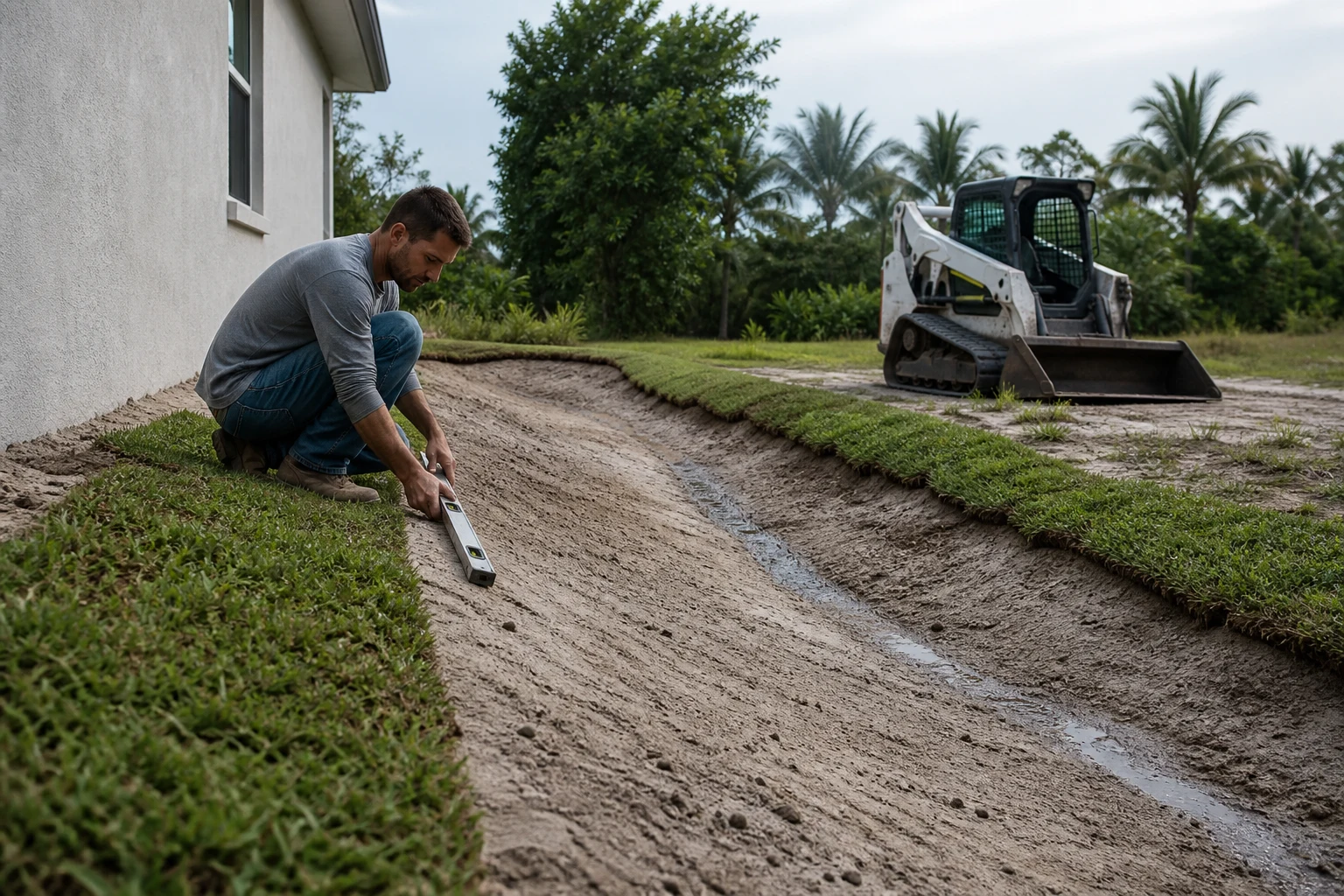
Prepare for a site visit
Frequently asked questions
No. North Port says swales may hold water for up to 72 hours after sustained rain. Water threatening a structure, crossing a lot improperly or remaining beyond normal conditions deserves closer evaluation.
No. A French drain needs suitable soil and a lawful lower outlet. High groundwater, flat grade or blocked public drainage can require another approach.
Do not assume so. Roadside swales and drainage easements are part of the city system. Confirm right-of-way and permit requirements first.
Small corrections can begin in the hundreds, while French drains, multi-zone grading and erosion work can reach several thousand dollars. Elevations, access, groundwater, permits and restoration determine the actual quote.
Request local drainage help
Tell the rain story with the property. An independent provider can confirm site-visit timing, proposed scope and final price.